





![[SKU:1TAMINO203HGRSB] Schlafsofa Hellgrau Holzfüße Sofa mit Schlaffunktion Schlafcouch Bettkasten Schlafsofa mit Bettkasten](http://belanoti.com/cdn/shop/files/1_Mustra_3-Sitzer_Hellgrau.jpg?v=1779009175)
![[SKU:1MODUL103HGROS] Sofa 3-Sitzer Hellgrau Polstersofa Couch Wohnzimmersofa Stoffsofa Designsofa](http://belanoti.com/cdn/shop/files/2_Comfi_3-Sitzer_Hellgrau.jpg?v=1778422123)
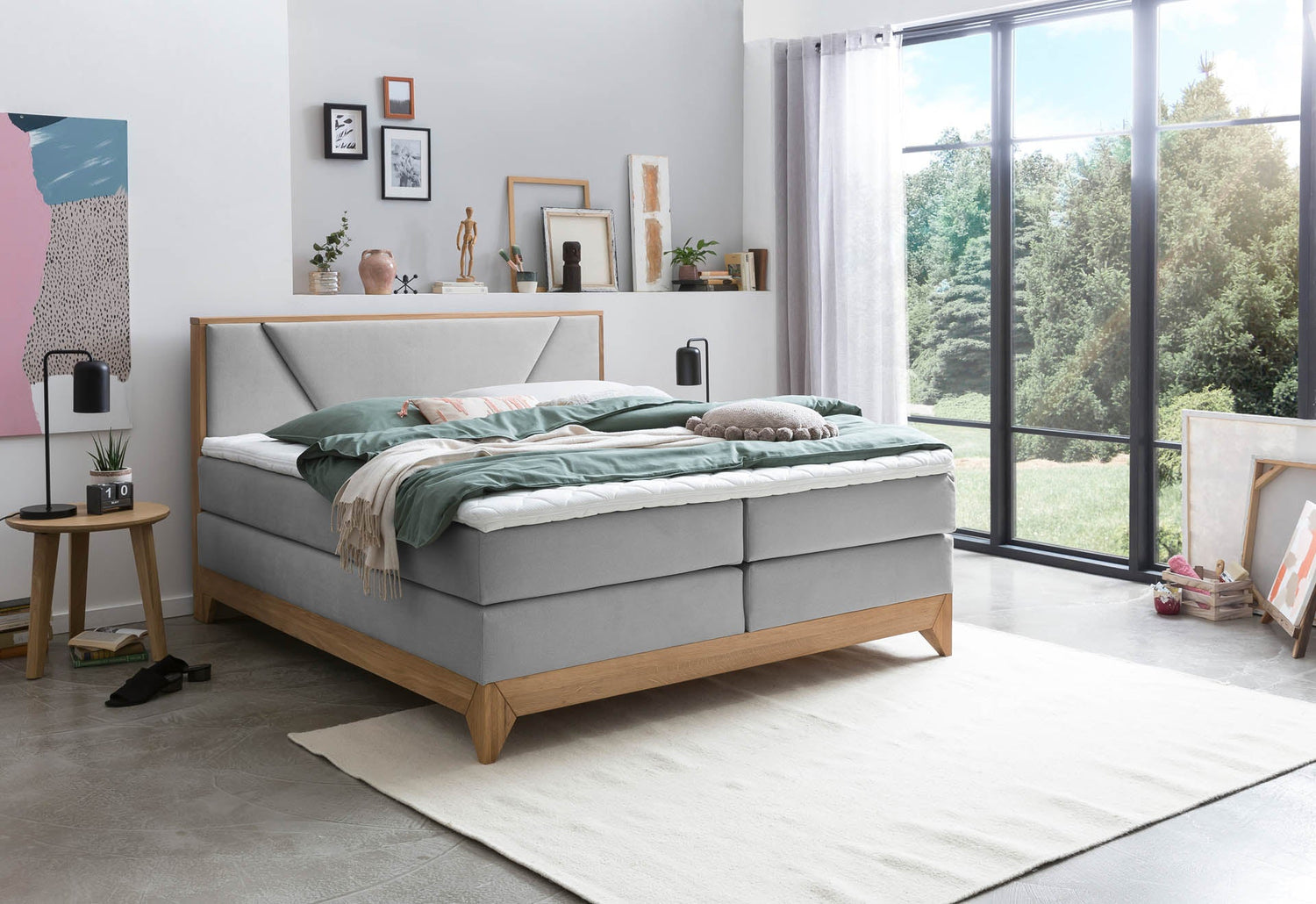
Are you currently considering buying a box spring bed? Then the classic questions quickly arise: Which design should it be? How does the headboard look? Which size fits in the bedroom? What many people underestimate, however, is that the firmness of the box spring bed significantly influences how your bed actually feels – whether you sink in softly, lie with stable support, or hit the sweet spot.
And that's precisely where it gets interesting: A box spring bed reacts differently than a classic mattress. The box springs, the mattress provides targeted support, the topper refines the sleeping experience – and the firmness level of the box spring mattress is where everything comes together.
Knowing which firmness level suits your body and sleeping style transforms the entire experience: you lie more naturally, more relaxed, and above all, in a way that feels right for you. This guide will help you understand the different firmness levels available, how to find the right one, and how to adjust the firmness of your box spring bed to be firmer or softer as needed.
Table of contents
- Basic knowledge about box spring bed mattresses and firmness levels
- Understanding firmness levels: How the box spring bed works as a system
- Which firmness level suits you best? – Guidelines based on weight and desired feel
- What sleeping position has to do with firmness
- Fine-tuning for sleeping comfort: small adjustments with a big impact
- Why the firmness level of a Belanoti box spring bed feels natural
- FAQ about firmness levels for box spring beds
Basic knowledge about box spring bed mattresses and firmness levels
- What does firmness level mean? By definition, the firmness level describes the firmness of the mattress in a box spring bed – in other words, how soft or firm you lie on it.
- What scales are used? The classic ratings range from H1 (very soft) to H5 (very firm). In practice, firmness levels for box spring beds fall within the range of H2, H3, and H4, because these combinations correspond to most body types.
- What do you base your decision on? A general rule of thumb: the higher your body weight, the firmer the mattress should be. But your sleeping position and personal preference also play an important role.
- Why doesn't the firmness of a box spring bed feel the same everywhere? Firmness levels aren't standardized. Each manufacturer defines them slightly differently – depending on the construction, spring core, and material mix. That's why an H3 firmness level from supplier A can feel significantly softer than an H3 level from supplier B.
Understanding firmness levels: How the box spring bed works as a system

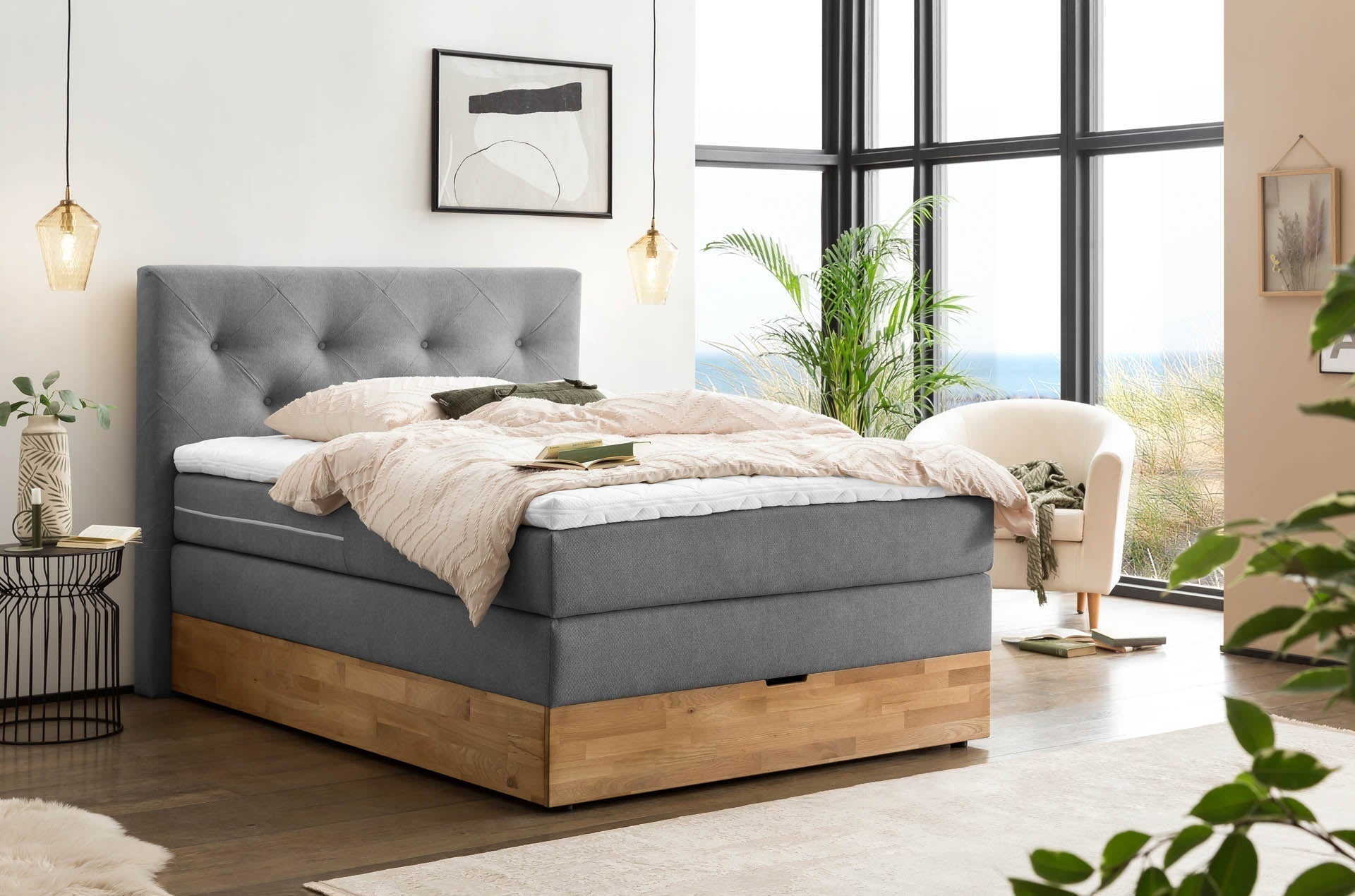
With a box spring bed, the firmness level isn't determined solely by the mattress, but by the interplay of the box, spring core, and topper . Everything is already coordinated – and that's precisely one of the advantages of a box spring bed . Instead of combining different slatted frames, bed frames, and mattresses, you get a system that's built as a single unit, resulting in a more direct and predictable sleeping experience.
The firmness scale generally ranges from H1 (very soft) to H5 (very firm) . H2, H3, and H4 are the most common because they cover the range in which most bodies can be well balanced.
Your new box spring bed – which firmness is right for you?
The appropriate firmness level depends on your body weight and desired sleeping comfort . The following overview offers a brief guide and is based on our regular experience at Belanoti:
| hardness level | Weight | lying sensation | Classification |
|---|---|---|---|
| H1 | up to approx. 60 kg | very soft | Children, teenagers or adults who consciously want to sleep on an extremely soft surface (this is rather rare) |
| H2 | approx. 60–85 kg | soft to medium firm | Lighter to average body types, often comfortable for side sleepers |
| H3 | approx. 85–110 kg | medium firm | the "all-round" level of firmness, which many perceive as balanced. |
| H4 | from approx. 110 kg | firmly | Suitable for stronger bodies or anyone who prefers a more stable lying position. |
| H5 | from approx. 120 kg | very firm | This rarely happens, as it's really tight – it's only specifically requested. |
What does my sleeping position have to do with the firmness of the box spring bed?
Your sleeping position reveals a lot about how your box spring bed should support you.
From an orthopedic perspective, the main thing is that your spine stays in its natural line – neither sagging nor overextended. And that feels a little different depending on your position:
- Side sleepers need space for their shoulders and pelvis. A slightly softer feel (H2 or a softer H3) allows these areas to sink in gently without the waist feeling "unsupported".
- Back sleepers often prefer a stable core. This is where the H3 mattress excels: the body sinks in slightly but remains well supported – ideal for relieving pressure on the lumbar spine.
- Stomach sleepers generally lie flatter. A mattress that's too soft is rarely comfortable, as it can cause the back to arch. Many therefore find a slightly firmer setting more comfortable, but this doesn't automatically mean it should be H4.
In short : Your sleeping position provides a guideline – and your body's signals determine what feels truly comfortable. A combination of both usually leads to the optimal choice.
Fine-tuning your sleeping comfort: Here's how you can make your box spring bed firmer – or softer.
There are a few simple adjustments you can make to fine-tune the firmness of your box spring bed without changing the system.
- Choosing the right topper: The topper noticeably influences the feeling of lying down: Cold foam feels more stable and provides firmer support, while visco reacts more softly and adapts more strongly.
- Note the material's reaction : Visco reacts to body heat and automatically softens during the night. If this becomes too soft for you, a cold foam topper is often a better fit.
- Rotate your mattress : Sometimes simply changing your sleeping position helps. The rotation distributes the pressure more evenly – and the surface feels more stable again.
- What's not a good idea : Improvised solutions like boards, panels, or cheap additional layers may change something – but often at the expense of ergonomics. The feel of the bed usually becomes unnaturally hard, and the suspension can no longer function properly.
For your information : If you choose an electrically adjustable box spring bed , you can't change the firmness level itself – but you can adjust your posture in bed very precisely. The variable position of the head and foot sections allows you to relieve pressure points and adjust the feel of the bed to be most comfortable for your body.

Why the firmness level of a Belanoti box spring bed feels natural
With the box spring bed It's not about a single component, but about the interplay between them. That's precisely where Belanoti beds often feel different – and more natural for many.
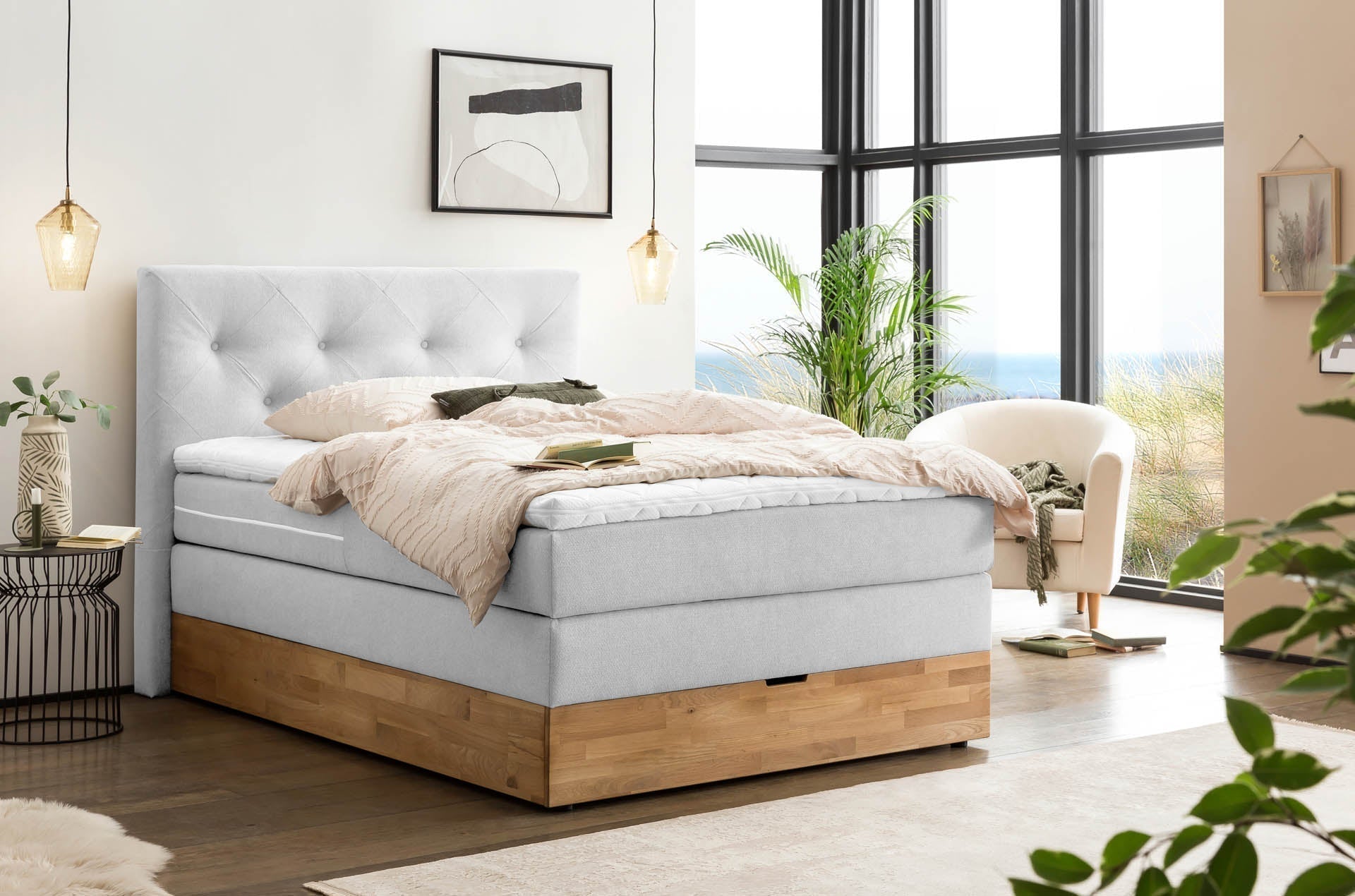
We build our box spring beds with wood . This means the box, with its Bonnell spring cores, is stable and comfortably absorbs movement. On top lies the 7- zone pocket spring mattress , which reflects the chosen firmness level and provides targeted support for your body. If you opt for a 180x200 cm or 160x200 cm box spring bed and share it with a partner, you'll often encounter what we see every day in our consultations: two people rarely have the same sleeping experience. That's precisely why our firmness levels can be flexibly combined on each side: a mattress can, for example, have H2 on one side and H3 on the other without any noticeable difference. H3/H4 is also possible if one side requires more support.
The topper completes the sleeping experience and provides the finishing touch – we offer a viscoelastic foam topper as standard, because it's pleasantly conforming for many sleepers and distributes pressure well. If you prefer a firmer, more defined feel, you can easily select a cold foam topper during the ordering process – at no extra cost.
Incidentally, our beds are manufactured in Europe – and you can feel it in the way they feel. No artificially "inflated" firmness levels for showrooms, but honest materials that perform as they should. In short: The firmness of your Belanoti box spring bed feels exactly as you choose it – and no other way.
FAQ about firmness levels for box spring beds
How important is my body weight in relation to the firmness of my box spring bed – and how much does my personal preference count
Your weight provides a general guideline for how well the mattress should support you. However, this doesn't mean everyone has to adhere to these specifications exactly. For example, many sleepers, even those of similar weight, have different preferences: one person might like a softer surface, while another feels more comfortable on a firmer one. Factors such as shoulder width, sleeping position, and the feel of your old bed also play a role. Therefore, the weight recommendation serves as a guideline – personal preference determines the final adjustment.
How do I know if the firmness level of a box spring bed is right for me
A good firmness level supports your body without creating pressure points. You shouldn't sag when lying on your side, and you shouldn't be forced into an arched back when lying on your back. If lying down feels calm, balanced, and natural – and you wake up without tension in the morning – then the firmness level is usually just right.
I feel the firmness of my new box spring bed isn't right – what could be the reason
A new bed feels unusual to your body at first. Your muscles and joints know the old sleeping surface inside and out – with all its quirks. When you introduce a new bed, your body often reacts a little cautiously. This is the so-called first-night effect: In a new sleeping environment, your body needs some time to truly relax. Many people experience this after a vacation. After a few nights, this feeling usually subsides, and after two to three weeks, your body has adjusted to the new surface.
To allow your body to properly adjust to the firmness of your new box spring bed, we offer a 30-night trial. This is more honest than five minutes of lying down in a furniture store – where the body often doesn't register how the bed feels over an entire night.

Leave a comment
This site is protected by hCaptcha and the hCaptcha Privacy Policy and Terms of Service apply.